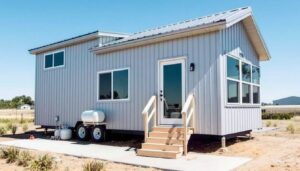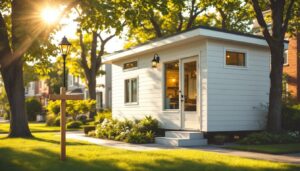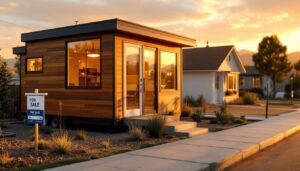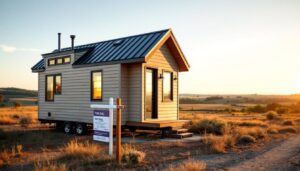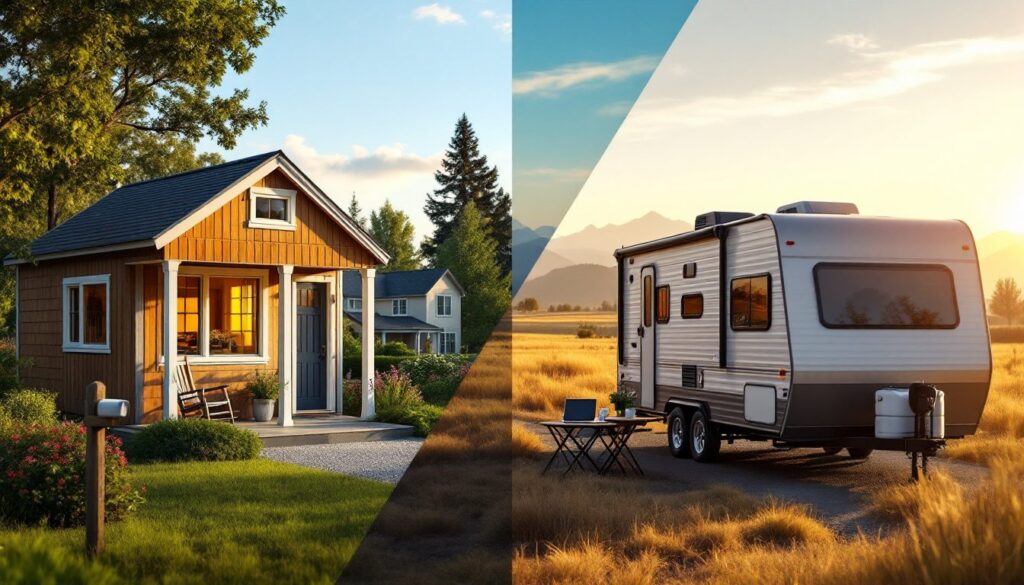
You’re standing at a crossroads: downsizing to something affordable but struggling to choose between a tiny house and an RV. Both promise lower costs and simpler living, but they’re fundamentally different. A tiny house is a fixed, land-based dwelling, think a permanent structure on a foundation. An RV is mobile by design, built for travel and temporary stays. The choice hinges on what “home” means to you: stability and community, or freedom and flexibility. This guide breaks down the critical differences so you can make an well-informed choice that aligns with your lifestyle and budget.
Table of Contents
ToggleKey Takeaways
- Tiny houses are permanent, land-based structures that appreciate in value, while RVs are mobile and depreciate 20–30% within five years, making tiny houses the better long-term financial investment.
- A tiny house requires zoning approval and permits but offers dedicated spaces for living and working, while an RV provides immediate mobility but sacrifices comfort with lower ceilings and multi-purpose rooms.
- Choose a tiny house if you value community, stability, and property equity; select an RV if you want frequent travel, flexibility, and short-term affordability without long-term commitment.
- RV living costs rise with maintenance (generator service, propane, repairs), while tiny house maintenance is predictable and follows standard home upkeep patterns, widening the ownership cost gap over 10+ years.
- Moving a tiny house on a trailer costs $3,000–$15,000 and requires professional permits, whereas an RV can relocate easily but faces legal restrictions on full-time residential parking in many neighborhoods.
- A hybrid approach—combining a seasonal travel trailer with a fixed home base—offers both flexibility and stability, though it requires higher upfront capital investment.
Understanding the Core Differences
Design Philosophy and Permanence
A tiny house and an RV might both be small, but they’re designed with opposing philosophies. A tiny house is built on a permanent foundation (concrete slab or pilings) and intended to stay put. It features full-size appliances, a conventional layout, and meets local building codes like a standard home. The structure itself, framed walls, insulation, roofing, follows residential construction standards.
An RV, by contrast, is engineered for mobility. It’s built on a chassis with wheels, uses lightweight materials, and prioritizes compactness over longevity. Appliances are scaled down (a small propane stove, compact fridge), and systems like plumbing and electrical are simplified for travel. An RV can be parked almost anywhere legally allowed, whereas a tiny house needs designated land and zoning approval.
This core difference shapes everything else: cost, maintenance, regulatory approval, and how long you can realistically stay in one place. Understanding which aligns with your vision is the first step.
Cost Comparison: Initial Investment and Ownership Expenses
Initial purchase price favors RVs in many cases. A new Class B or C RV (20–32 feet) typically costs $40,000–$80,000, while a tiny house on a trailer runs $60,000–$150,000, and a foundation-built tiny home can exceed $200,000 depending on location and finishes. If budget is your only concern, an RV seems cheaper upfront.
But long-term ownership costs tell a different story. Tiny houses hold value like traditional homes, especially in markets with strong demand. An RV depreciates sharply, expect 20–30% value loss in the first five years. RVs also demand higher annual maintenance costs: generator service, propane refills, rooftop inspections, and system repairs (plumbing, electrical, slide-outs) add up quickly. A tiny house needs standard home maintenance, roof, siding, HVAC, but these are predictable and often less frequent.
Tiny houses appreciate with improvements and land value: RVs do not. Insurance, registration, and fuel costs for RVs (if you travel) further widen the gap over time. For true affordability over 10+ years, a tiny house wins. For temporary, low-commitment living, an RV minimizes financial exposure.
Mobility and Flexibility
If you crave constant movement, an RV is built for it. Hook up, drive, and set up at your next destination, no paperwork, no permits, no roots. Seasonal travelers, digital nomads, and adventure seekers thrive in this flexibility. You wake up to a different view every few weeks or months, and there’s genuine appeal in that freedom.
Tiny houses lock you in place. Moving a tiny house on a trailer requires a professional hauler, special permits, and costs $3,000–$15,000 depending on distance. It’s possible but not convenient. Once you own land and park your tiny house, you’re settled. This is actually a strength if you value community, schools, and stability, but it’s a liability if you’re restless or uncertain about location.
RVs do come with trade-offs. Campgrounds can be noisy, hookups vary in quality, and some locations have strict rules. Winter in cold climates requires winterization or heading south. Tiny houses, meanwhile, integrate into neighborhoods. Your kids attend local schools, you build friendships, and you’re part of a community in a way that’s harder with constant travel.
Space Utilization and Living Comfort
Both claim to maximize small footprints, but comfort differs significantly. Tiny Homes Strategies: Smart Approaches to Small-Space Living show that fixed tiny houses allow full-height ceilings, separate rooms, and proper storage because they don’t need to minimize weight. A 400-square-foot tiny house feels spacious with 8-foot ceilings, a real kitchen, and a dedicated bedroom.
RVs sacrifice comfort for mobility. Ceilings are lower (often 6’3″–6’6″), rooms are multi-purpose (dinette converts to bed, living area is bedroom), and storage is tight. For a week or two, it’s an adventure. For months or years, it’s cramped. Many full-time RVers report fatigue from perpetual proximity and lack of privacy.
Tiny houses also support full-size fixtures and larger windows, letting in natural light. RV windows are small and often have heavy blinds for heat and privacy control. If you work from home or have family, a tiny house’s distinct spaces (office, living, bedroom) reduce friction. An RV blurs all boundaries into one moving box. For long-term living, a tiny house wins on livability.
Legal Requirements and Zoning Considerations
Parking an RV is simpler legally but more restrictive in practice. Most RVs can park in RV parks, designated campgrounds, or dispersed public land (rules vary by region). But, living full-time in an RV in a residential neighborhood is often prohibited by local ordinances. Some states have no regulations: others restrict RV parking to 14 consecutive days per location.
Tiny houses face the opposite challenge: placing one on your own land requires zoning approval. Many jurisdictions don’t allow tiny houses in residential zones due to minimum lot size, setback, or minimum square footage requirements. ADU (accessory dwelling unit) zoning is expanding, but it’s still limited. You’ll need to verify local codes before buying. But, once approved and placed, your tiny house is permanent and legal.
Tiny Homes Guide: Everything covers these zoning complexities in detail. If you own land or can purchase it in a tiny-house-friendly jurisdiction, tiny houses are legally straightforward. If you have no fixed location or land, an RV sidesteps zoning battles but limits where you can actually live. Check local regulations before committing to either option.
Which Option Fits Your Lifestyle?
Choose a tiny house if: You want to stay in one place (or return to it seasonally), you value community and stability, you work from home and need dedicated space, or you plan to build equity in property. Tiny Homes vs. Traditional Homes: Which Lifestyle Fits You Best? compares deeper tradeoffs. Tiny houses suit people seeking affordability without sacrificing comfort or permanence.
Choose an RV if: You’re retired and want to explore the country, you work remotely and love changing scenery, you’re testing affordable living before committing long-term, or you enjoy campfire communities and road-trip culture. An RV is ideal for 1–3-year experiments or seasonal migration. Real Simple offers home organization tips and decluttering guides that help downsize before either move.
A hybrid approach exists too: Some people buy both, a small travel trailer for seasonal trips and a modest fixed home base. This splits costs and flexibility, though it requires more capital upfront. Others start with an RV to test minimalist living, then invest in a tiny house once they’re confident about downsizing.
Your decision eventually rests on three questions: Do you need to move frequently? Do you want property equity? Can you handle RV-life logistics long-term? Honest answers point you toward the right choice.