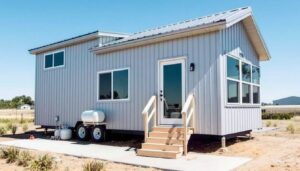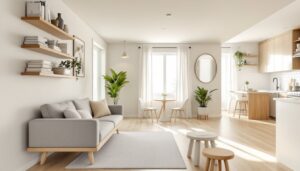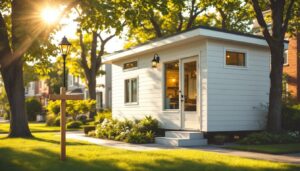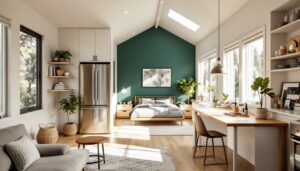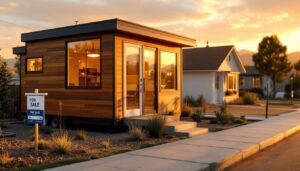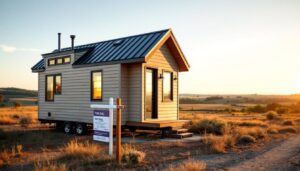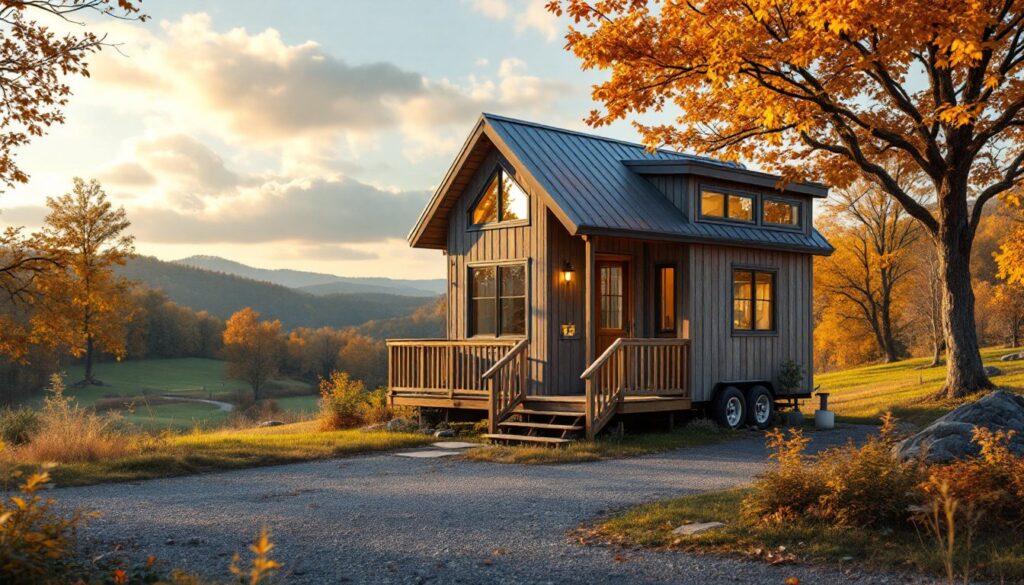
Pennsylvania is witnessing a quiet but significant shift in how people think about home ownership and community living. Tiny houses, typically defined as dwellings under 400 square feet, are gaining traction across the Keystone State, from rural corners of the Poconos to the periphery of Philadelphia and Pittsburgh. Whether driven by affordability, environmental consciousness, or a genuine desire to simplify, more Pennsylvanians are exploring this downsized lifestyle. For homeowners and DIY enthusiasts considering a move to a tiny house or building one from scratch, understanding the practical landscape matters. This guide walks through Pennsylvania’s specific opportunities, regulations, and design strategies to help you navigate the tiny house journey.
Table of Contents
ToggleKey Takeaways
- Tiny houses in Pennsylvania offer affordable homeownership with utility savings of 50–70% compared to traditional homes, making them attractive to first-time builders seeking sustainability and simplification.
- Zoning regulations for tiny house Pennsylvania vary significantly by township, so contacting your local zoning office before purchasing land is essential to verify minimum size requirements, ADU policies, and building restrictions.
- Lehigh Valley, the Poconos, Western Pennsylvania, and Central PA regions offer the most favorable conditions for tiny house development with lower land costs and more flexible municipal zoning policies.
- Building a tiny house in Pennsylvania costs $150–$200 per square foot when professionally constructed, with options ranging from finished units ($80,000–$150,000) to DIY projects that can save on labor costs.
- Pennsylvania’s cold winters demand superior insulation (R-30 in walls, R-60 in ceilings), proper window orientation, air sealing, and ventilation systems like ERVs to ensure comfort and efficiency in a tiny home.
- DIY and cost-effective strategies like using modular construction, reclaimed materials, slab-on-grade foundations, and deferring non-essential finishes can significantly reduce your total tiny house investment without compromising quality.
Why Pennsylvania Is Becoming a Tiny House Haven
Pennsylvania’s appeal as a tiny house destination rests on several concrete factors. First, land costs outside major metropolitan areas remain reasonable compared to coastal states, making the total investment, land plus construction, more achievable for first-time builders. Second, the state’s four-season climate demands solid building practices, which inadvertently filters out shoddy construction and encourages durable, well-insulated designs. Third, Pennsylvania has a deep tradition of skilled trades and craftspeople: finding someone familiar with efficient framing, weatherization, and quality finishes is easier here than in areas with less construction heritage.
The state also benefits from proximity to major cities without the density premium. You can build 45 minutes outside Pittsburgh and still access urban services, employment, and culture. Rural and semi-rural communities are increasingly open to tiny house development as a way to attract younger residents and revitalize aging properties. Environmental awareness plays a role too, Pennsylvania homeowners are increasingly interested in reducing their carbon footprint, and a tiny house with modern insulation and efficient systems delivers measurable environmental wins. According to industry trends, tiny houses strategies show how downsizing can lower utility costs by 50–70% compared to traditional homes.
Pennsylvania’s Zoning Laws and Tiny House Regulations
This is where reality meets aspiration. Pennsylvania doesn’t have a statewide tiny house code: instead, zoning and building regulations fall to municipalities and counties. That means your feasibility depends heavily on where in Pennsylvania you want to build. Some townships welcome accessory dwelling units (ADUs) and small homes, while others have minimum lot sizes of 2+ acres or minimum square footage requirements that exclude tiny houses entirely.
Most Pennsylvania municipalities follow the International Residential Code (IRC), which sets construction standards but doesn’t prohibit small homes outright. But, local ordinances often add restrictions, minimum setbacks, lot coverage limits, or mandatory garage space, that can make tiny house placement impossible.
Legal Considerations for Tiny House Owners
Before buying land or breaking ground, contact your township zoning office and request the relevant ordinance. Ask specifically about:
- Minimum dwelling unit size (some townships specify 1,000+ sq ft: others have no minimum)
- ADU regulations (can you place a small home on a parent’s property?)
- Mobile/modular home status (some tiny houses are classified as manufactured homes, triggering different rules)
- Setback and lot coverage requirements (how close can structures sit to property lines?)
- Parking and driveway specifications (does a tiny house need two parking spaces?)
Building permits are mandatory for any permanent structure: ignoring this invites code enforcement action, fines, and forced removal. If your township currently prohibits tiny houses, contact the supervisor or planning commission, some municipalities are updating codes to accommodate ADUs and small dwellings. Show them tiny homes examples of successful projects and proof of demand in your community. Advocacy works: Chester County and some Lehigh Valley townships have recently relaxed restrictions to allow ADUs.
Best Regions in Pennsylvania for Tiny House Living
Not all of Pennsylvania is equally hospitable to tiny houses, but several regions stand out as friendlier to small-scale development.
Lehigh Valley & Poconos: Counties like Northampton and Carbon have growing tiny house interest, more flexible zoning in some townships, and lower land costs than eastern PA suburbs. The region’s outdoor recreation appeal attracts younger, often sustainability-minded residents. Internet connectivity is improving, making remote work viable.
Western Pennsylvania (outside Pittsburgh): Washington, Fayette, and Greene counties offer affordable acreage, less stringent zoning in many areas, and a growing network of rural homesteaders. Pittsburgh’s renaissance has drawn interest to the periphery without the density of the city itself.
Central PA: Areas around Harrisburg, Lancaster, and Carlisle blend farmland affordability with proximity to jobs and services. Lancaster County, even though Amish dominance, has been selective about welcoming small residential projects in non-Amish townships.
Northeast (Scranton area): Rural Luzerne, Pike, and Wayne counties have ample cheap land and minimal zoning interference in many townships, though you’ll trade proximity to services for privacy and acreage.
Avoid: Close-in suburbs of Philadelphia and Pittsburgh (Delware, Allegheny, Chester counties near the cities) where zoning is restrictive and land is expensive. Wealthy suburban townships typically enforce large minimum lot sizes and building square footage.
Research your specific township on the municipal website or call directly. One favorable regulation in one township doesn’t apply two miles away.
Building or Buying a Tiny House in Pennsylvania
You have three main paths: buy a finished tiny house (rare in PA), buy raw land and hire a builder, or design and build it yourself (or with a contractor). Each has tradeoffs.
Buying finished: A handful of tiny house builders operate in PA, but inventory is thin. Expect $80,000–$150,000 for a quality 300–400 sq ft home delivered. You’ll need land secured first and municipal approval for placement.
Land + builder: Survey and prepare land (2–8 weeks, cost: $500–$2,000 for survey: prep depends on site conditions). Then contract with a builder familiar with small homes and Pennsylvania code. Timeline: 4–6 months for construction. Total budget: $120,000–$250,000 depending on finishes and site difficulty.
DIY or owner-builder: Many PA townships allow owner-builder permits if you live on-site during construction. You’ll need design plans (hire an architect or use pre-designed plans, $2,000–$8,000), pull permits, and coordinate trades. This route saves labor costs but demands your time and decision-making. Timeline: 6–12 months depending on your skill level and available hours.
Cost-Effective Approaches to Tiny Home Ownership
Minimize cost without sacrificing quality by prioritizing strategic buys and DIY-friendly choices:
- Modular approach: Consider a modular home (built in a factory, assembled on-site). Modular often undercuts site-built by 15–20% and arrives in weeks. Check if your township accepts modular, most do, but verify first.
- Reclaimed and salvage materials: Pennsylvania has abundant architectural salvage suppliers. Reclaimed hardwood, vintage doors, and second-hand fixtures cost less and add character.
- Defer finishes: Build the shell tight and weatherproof, install plumbing and electrical to code, but leave cosmetic work (trim, finishes, paint) for later when your budget refreshes.
- Foundation type: A slab-on-grade foundation (concrete pad poured directly on compacted soil) is cheaper than a traditional full basement but requires good drainage and frost depth consideration (Pennsylvania frost line: 3.5–4 feet depending on region).
- Off-grid potential: If your township allows it and your site suits it, designing for solar, a well, and septic (instead of municipal utilities) can lower long-term costs and increase independence. Off-grid systems cost $15,000–$30,000 upfront but pay back over time.
Estimate conservatively: $150–$200 per square foot for a well-built tiny house in PA (including land prep, permits, and professional trades). A 350 sq ft home on owned land runs roughly $52,500–$70,000 in labor and materials alone.
Design Ideas for Pennsylvania Tiny Houses
Pennsylvania’s climate and landscape should inform your design. Winters are real, expect snow, ice, and heating demand from November through March. Summers are humid. Your design must handle these demands efficiently.
Insulation: Don’t cheap out here. Aim for R-30 in walls (vs. code-minimum R-13) and R-60 in ceilings. Use closed-cell spray foam or dense-pack cellulose. Air sealing is critical, every penetration (outlet, pipe, duct) is a thermal leak. Pennsylvania homes get heat bills: design for efficiency and you’ll thank yourself every January.
Windows and orientation: South-facing windows with proper overhang capture winter sun and reduce heating load. Use insulated, low-E double-pane windows. North-facing glazing should be minimal, it’s a thermal liability in winter. Consider a metal roof, it sheds snow and ice better than asphalt, and lasts 40+ years (vs. 15–20 for shingles), reducing lifetime maintenance.
Layout: In a 300–400 sq ft space, every square foot counts. An open living/kitchen area with a separate bedroom and bathroom is the norm. Sleeping lofts (accessed by ladder) can add bedroom space if headroom permits, but they’re harder to use as you age. Think long-term.
Kitchen: Kitchens in tiny houses demand careful design. Compact appliance suites (24″ refrigerators, 24″ electric ranges) save space without sacrificing function. A galley layout (two parallel counters) or L-shaped configuration works better than a large island in a small footprint. Look at small kitchen solutions for inspiration and spatial organization tricks.
Storage: Built-in cabinetry, under-stair drawers, and tall shelving maximize vertical space. Custom-built storage costs more upfront but beats fighting clutter in a small home.
Ventilation: A small ERV (Energy Recovery Ventilator) brings fresh air in while exhausting stale air and recovering 75%+ of heat (or cooling). It keeps your tiny house from feeling stuffy and removes moisture, critical in a well-sealed envelope. Cost: $2,000–$4,000 installed, but it pays for itself in comfort and durability.
Materials and finishes: Light colors (whites, creams, pale grays) make small spaces feel larger. Use finishing techniques detailed in fine homebuilding resources to elevate the final product, think trim details, crown molding, built-in shelving. Small homes reward craftsmanship because you see everything.
Outdoor extension: If your lot permits, a 8×12 ft covered porch or deck adds functional living space without expanding the building footprint. A screened porch is especially valuable in Pennsylvania summers (mosquitoes are relentless).
Reference tiny homes ideas for specific Pennsylvania projects and how they’ve adapted to regional conditions.