Blueprints for tiny homes have evolved far beyond the novelty phase, they’re now serious solutions for affordable housing, sustainable living, and lifestyle flexibility. Whether you’re planning a 200-square-foot mobile unit, a backyard cottage, or a compact primary residence, a solid blueprint is your roadmap. It’s the difference between a cramped box and a thoughtfully designed space that actually works. The key isn’t just fitting everything in: it’s designing layouts that feel open, function smoothly, and work within building codes and your budget. Let’s walk through what makes tiny home blueprints special and how to turn one into reality.
Table of Contents
ToggleKey Takeaways
- Blueprints for tiny homes are essential roadmaps that transform compact spaces into functional, open layouts by prioritizing traffic flow, vertical storage, and natural light.
- Before purchasing or designing blueprints, verify local zoning laws, building codes, and square-footage requirements—regulations vary significantly by jurisdiction and can make a plan illegal in your area.
- Space-efficient layouts use pocket doors, lofted bedrooms, wall-mounted shelving, and multi-functional furniture (like kitchen islands that serve as dining and storage) to maximize usable space.
- Popular tiny home floor plan styles include open-plan designs, separated-bedroom models, dual-sleeping areas, and mobile trailer-based blueprints, each suited to different priorities and lot constraints.
- Ready-made tiny home blueprints cost $50–$500, while fully custom designs from local architects run $2,000–$5,000 but guarantee compliance with building codes and site-specific fit.
- Construction costs range from $100–$250+ per square foot; a 250-sq-ft home typically costs $25,000–$60,000 in materials and labor, and skipping proper site preparation and quality materials creates structural problems.
Understanding Tiny Home Design Fundamentals
Tiny home design starts with a different mindset than traditional construction. Most jurisdictions define a tiny home as any permanent or semi-permanent dwelling under 400 square feet, though some go even smaller. The catch: your blueprint must account for zoning laws, building codes, and utility constraints that don’t apply to larger homes.
Before you fall in love with a floor plan, check local regulations. Some areas require minimum square footage for permanent residences (often 500–700 sq ft), living room sizes, ceiling heights, and egress windows in bedrooms. Others allow tiny homes only in designated zones or as accessory dwelling units (ADUs). A blueprint that works in Oregon might be illegal in Texas. That’s not scare-mongering, it’s reality, and ignoring it wastes time and money.
Key Principles Of Space-Efficient Layouts
Every inch of a tiny home needs to pull double duty. Start with traffic flow: can you move through the space without banging hips on furniture? Efficient layouts minimize wasted hallway space by combining functions, a kitchen island might serve as dining, storage, and visual separation from the living area.
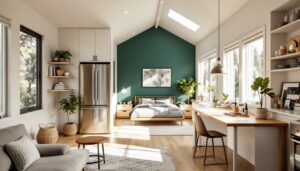
Vertical thinking is essential. Wall-mounted shelving, lofted bedrooms, and high cabinets capture storage without eating floor space. Many tiny home blueprints feature sleeping lofts reached by stairs or ladders: this frees up the ground floor for living and working zones.
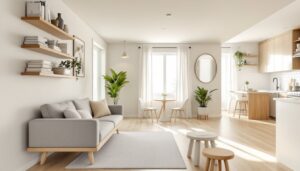
Natural light and sightlines matter more in small spaces. Blueprints that use open layouts, large windows, and minimal wall partitions feel significantly bigger than their square footage suggests. Pocket doors (which slide into walls) replace swing-out doors, saving 2–3 feet of clearance. A well-designed tiny home should never feel like you’re living in a shoebox, good blueprints prevent that through thoughtful proportions and strategic openings.
Popular Tiny Home Floor Plan Styles
Tiny home blueprints come in several time-tested configurations, each suited to different priorities and lot constraints.
The open-plan layout dominates modern blueprints. Kitchen, living, and dining merge into one flexible zone with a sleeping loft above. This design maximizes openness and lets residents adapt the space as needs change. It works best if you don’t mind being visible while cooking or working.
The separated-bedroom model includes a defined bedroom, usually a ground-floor nook with a door or the aforementioned loft bedroom. This suits couples, families with young kids, or anyone who needs privacy. Trade-off: less perceived spaciousness on the main level.
The dual-sleeping-area layout includes both a main bedroom and a secondary loft or bunked alcove. Families and co-inhabitants prefer this: it feels less crowded. The blueprint gets tighter, though, so clearances demand extra attention.
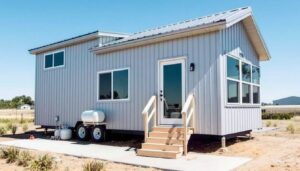
Mobile or trailer-based blueprints fit ANSI/RVIA standards (Recreational Vehicle Industry Association standards) and sit on a chassis. These are cheaper to move and often easier to permit on rural land, but they’re narrower (typically 8–13 feet wide) than site-built designs, which demands really clever floor planning.
You can also find shed-style tiny homes (tall, narrow footprints with steep roofs) and container conversions (shipping-container shells that get outfitted inside). Container designs often look striking but require professional structural work and insulation upgrades that add cost. Tiny Homes Trends shows what’s gaining traction in 2026, minimalist Scandinavian layouts and off-grid-ready designs are hot right now.
Maximizing Functionality In Compact Footprints
A tiny home blueprint is only as good as its usable space. Smart layouts avoid dead zones, corners that can’t fit a chair, walls that can’t hold a bed or desk because of ceiling height changes or windows.
Open shelving visible from the living area serves as both storage and décor: it encourages organization (clutter shows). Underneath stairs, dead space becomes a closet, drawer bank, or pantry. Bathroom layouts shrink by switching to a corner sink, a compact toilet, and a shower stall instead of a tub. You lose the soaking tub, but a 5-by-7 bathroom still fits laundry, a shower, and linen storage if planned right.
The kitchen in a well-designed tiny home is often the most expensive zone per square foot. Blueprints typically feature a single wall or galley configuration (two parallel counters facing each other), a small island that seats two, or a breakfast nook. Appliances are compact: a 24-inch refrigerator instead of 36 inches, a combo washer-dryer tucked in a closet, or a convection microwave oven that heats and bakes.
Storage Solutions And Multi-Use Spaces
Storage is the heartbeat of tiny living. Blueprints should include a linen closet, a pantry (even if it’s 2 feet deep), a coat closet near the entrance, and under-bed drawers or cabinets. Built-in benches with lift-top storage, murphy beds that fold into walls, and fold-down work desks multiply functionality without clutter.
Furniture placement is baked into good blueprints. A sofa might face a murphy TV screen that tucks away when not in use. A dining table might have one side anchored to the wall so chairs don’t block movement. Bedding is deliberate, a queen fits the loft, but a full leaves more headroom and feels less cramped.
How to Build a Tiny Home: A Complete Beginner’s Guide breaks down how storage planning begins during the blueprint phase, not after you’ve framed walls. Retrofitting storage is expensive and time-consuming. Essential Tiny Homes Tools and Tiny Homes Techniques walk you through what you’ll need to build and what you’ll need to measure twice.
Finding And Customizing Blueprints For Your Project
You don’t have to start from scratch. Hundreds of ready-made tiny home blueprints exist online, ranging from $50 to $500+ depending on detail level and customization.
Pre-drawn blueprints from small-home specialists (many available through FineHomebuilding, plan databases, and indie architects) give you a complete set: floor plan, elevations, electrical layouts, and material lists. Costs are reasonable because the designer amortizes design time across multiple buyers. The downside: you’re locked into their dimensions unless a local architect modifies them.
Semi-custom plans let you pick a base layout and pay extra for changes, a different door, a moved wall, or an adjusted loft height. This middle ground suits most DIYers and owner-builders.
Fully custom design means hiring a local architect or designer. Expect $2,000–$5,000+ for a complete set of tiny home blueprints, plus consultation hours. It’s pricey but guarantees the design fits your lot, complies with local codes, and matches your lifestyle. Many architects now specialize in ADUs and small homes: they’re worth the investment if you’re building a permanent structure.
When evaluating any blueprint, ask: Does it show a foundation type suitable for your site (slab, piers, crawlspace)? Are ceiling heights at least 7 feet 6 inches in main spaces (7 feet is code minimum, but cramped)? Does the electrical layout match modern demands (enough outlets, adequate panel size)? Is there a separate ventilation plan for kitchen and bathroom moisture? Tiny Homes for Beginners digs into what to look for before purchasing plans, and Tiny Homes Examples showcases real blueprints so you can see what works.
Building Your Tiny Home: From Blueprint To Reality
A blueprint on paper is not a house. Permitting, material sourcing, and construction are where the real work happens.
Permitting varies wildly by jurisdiction. Some rural areas barely inspect tiny homes: others require full permits, multiple plan reviews, and inspections at each phase (foundation, framing, electrical, plumbing, final). Budget 4–12 weeks for this, plus engineer stamps if required. If your blueprint isn’t stamped by a licensed engineer, the building department may require one. That’s a $1,000–$2,000 extra cost, but it’s non-negotiable in many places.
Site prep is unglamorous but critical. Your blueprint specifies the foundation: a concrete slab, treated-lumber piers, or a crawlspace. Skipping proper site leveling, grading, and drainage causes foundation cracks, water intrusion, and structural failure in just a few years. Measure twice, mark the perimeter, and rent a laser level if you’re unsure.
Material sourcing for a 200–300 sq ft home is actually easier than for a large house, you need less lumber, fewer shingles, less siding. But, some materials (compact appliances, lofted bed frames, specialty hardware) may need ordering online. Lumber acclimation is still important: let framing lumber sit on-site for a week before framing so it adjusts to local humidity.
Construction sequencing follows the same logic as any house, foundation, framing, roof, exterior closure, interior rough-ins (electrical, plumbing, HVAC), drywall, finish trades. The difference: a tiny home can be framed by two people with hand tools and a circular saw, unlike a 2,500-sq-ft house. Building time is often 6–12 months for owner-builders, 3–6 months with a crew. Resources like The Handyman’s Daughter and Ana White offer practical step-by-step guidance for beginners tackling construction, their emphasis on clear instructions and beginner-friendly projects aligns perfectly with the mindset you’ll need.
Safety gear is non-negotiable: safety glasses, work gloves, a dust mask or respirator (especially when cutting treated lumber or insulation), and hearing protection around loud tools. A hardhat on a ladder or under eaves prevents head bumps that turn bad quickly on a tiny home where ceilings are lower.
Budget reality: Tiny home construction costs $100–$250+ per square foot (vs. $150–$300 for conventional homes), depending on location, finishes, and site challenges. A 250-sq-ft home might cost $25,000–$60,000 in materials and labor. That’s why they’re attractive, but don’t assume they’re cheap, corner-cutting on framing, insulation, or roofing creates problems fast.