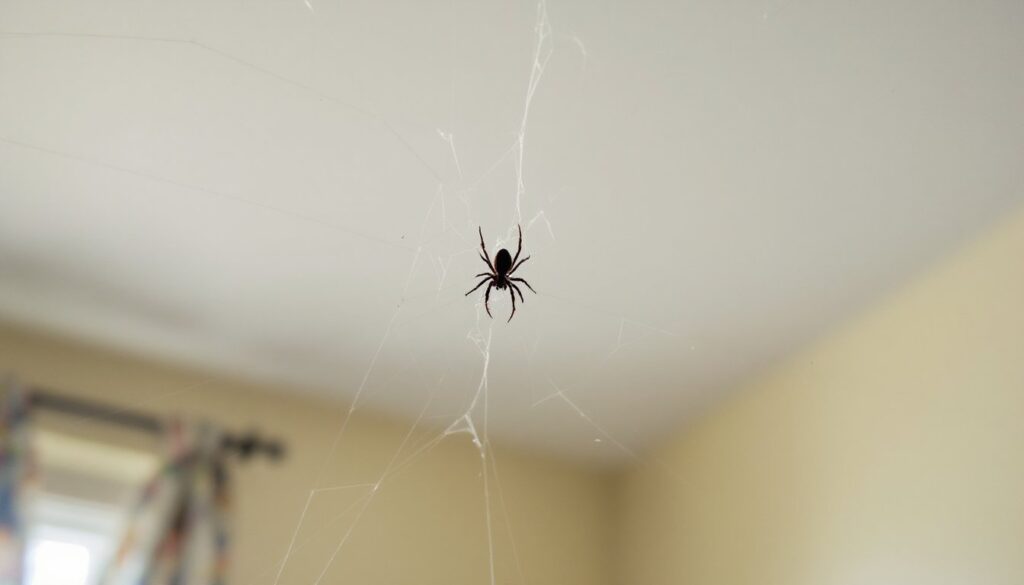
Most homeowners spot them eventually, a tiny black spider in the corner of a bedroom, behind a curtain rod, or tucked into the gap where the wall meets the ceiling. Your first instinct might be to panic and grab the nearest shoe, but before you do, it’s worth understanding what these creatures actually are, why they’re in your home, and whether they pose any real threat. Tiny black house spiders are far more common than people realize, and in most cases, they’re doing you a favor. This guide covers identification, behavior, safety concerns, and practical strategies for managing them if they become a nuisance.
Table of Contents
ToggleKey Takeaways
- Tiny black house spiders are harmless arachnids that pose no real threat to humans and rarely bite unless aggressively squeezed.
- Most tiny black house spiders in U.S. homes are common house spiders (genus Parasteatoda) or cobweb spiders, identified by their irregular, messy webs rather than organized patterns.
- These spiders provide natural pest control by catching dozens of gnats, mosquitoes, and small flying insects, making them beneficial to have around.
- Simple prevention methods like sealing gaps, reducing clutter, and using screens are more effective than chemical treatments for managing house spider populations.
- If a tiny black house spider bothers you, safely remove it using a vacuum, broom, or tissue, then release it outdoors rather than killing it.
- Professional pest control intervention is only necessary if you suspect a black widow infestation, have a widespread spider problem, or notice an underlying insect infestation fueling spider populations.
What Are Tiny Black House Spiders?
Tiny black house spiders are small arachnids commonly found in residential spaces across North America. Most species range from one-eighth to one-quarter inch in body length, making them barely visible to the naked eye unless you’re looking for them. Their dark coloring and small size often make them easy to overlook, until they suddenly appear on your bathroom tile or in a hallway.
Common Species and Identification
The most frequent culprits in U.S. homes are common house spiders (genus Parasteatoda) and cobweb spiders (family Theridiidae). Common house spiders are brownish-black with robust bodies, while cobweb spiders tend to be shinier and slightly rounder. Both species build irregular, sticky webs in corners and sheltered spots. The key way to identify them: look at their web pattern. If it’s a messy, irregular mesh rather than an organized orb or funnel, you’re likely looking at a house spider.
Another possibility is the black widow (genus Latrodectus), though these are much rarer indoors and have a distinctive shiny black body with a red or orange hourglass mark on the abdomen. If you spot a marking like that, it’s worth taking extra caution, though bites are extremely uncommon. Most tiny black spiders found in homes are harmless common house spiders, not dangerous species.
Where They Live and Why They’re in Your Home
Tiny black house spiders thrive in stable, temperate indoor environments. They’re attracted to spaces where they can build webs and wait for prey, typically corners, ceiling angles, window frames, and places where dust collects. They’re not drawn to your home because it’s dirty: even pristine homes have these spiders. What matters to them is stable temperature, shelter, and access to small flying insects like gnats, fruit flies, and mosquitoes.
During fall and early winter, as outdoor temperatures drop and insects move indoors, you might notice an uptick in house spiders. They’re not migrating: they simply become more visible as their food sources concentrate indoors. If you have basements, attics, or crawl spaces, these areas tend to harbor spider populations year-round because conditions are consistently cool and stable.
One detail worth noting: house spiders often end up in homes through hitchhiking on boxes, plants, or goods brought inside. Once they establish a web, they stay put because the environment works for them. They’re not actively seeking humans, you’re incidental to their survival. According to resources on spider removal, understanding their behavior is the first step to managing them humanely.
Are Tiny Black House Spiders Dangerous?
The straightforward answer: no, tiny black house spiders are not dangerous to humans. They don’t bite unless you directly squeeze or aggressively handle them, which is exceedingly rare. Their venom, if they inject any, is designed for subduing insects, not mammals. Their fangs are too small to pierce human skin in normal contact.
The only scenario where concern might be warranted is if you have a legitimate black widow infestation, which is uncommon indoors. Black widows have venom potent enough to cause medical symptoms, but they’re shy and nonaggressive. If you see a spider without the distinctive hourglass marking, you’re almost certainly dealing with a harmless house spider.
What house spiders do offer is pest control. A single spider can catch dozens of gnats, mosquitoes, and other small insects over its lifetime. From a practical home management standpoint, having a few house spiders around reduces the population of more annoying pests. Many pest control professionals actually recommend tolerating house spiders for this reason. The irritation most people feel is psychological, not based on actual danger.
People with arachnophobia or very young children who might be frightened are the primary “concern”, but that’s about comfort level, not safety. If you’re pregnant, immunocompromised, or have concerns specific to your situation, consult a physician. In the vast majority of cases, tiny black house spiders are benign.
How to Safely Remove and Prevent Tiny Black House Spiders
If a spider’s presence bothers you, removal is straightforward. The simplest method is to use a vacuum hose or a broom to collect the web and spider, then release it outside or flush it. This is faster, safer, and kinder than crushing it. Alternatively, use a tissue or paper towel to gently catch the spider and release it outdoors. Always wear nitrile gloves if handling bothers you, it’s more about comfort than safety.
For prevention, focus on reducing their food sources and shelter spots:
- Seal gaps and cracks around baseboards, window frames, and door frames with caulk or weatherstripping. This reduces entry points for both spiders and flying insects.
- Reduce clutter in corners, closets, and storage areas where webs form easily. Clear out stacked boxes or piles of fabric.
- Use screens on windows and ensure they’re in good repair.
- Control moisture. While house spiders don’t need much water, areas with excess humidity may attract more flying insects, which in turn attract spiders.
- Declutter regularly. Vacuuming corners and edges removes webs before they become established.
- Consider peppermint oil or cedar spray if you want a deterrent. Some DIYers report mixed results, but these are non-toxic and worth trying in targeted areas.
Standard insecticide sprays are overkill for a few house spiders and introduce chemicals unnecessarily. Save chemical treatments for genuine pest problems.
When to Call a Professional
You should consider professional help in these scenarios:
- You suspect a black widow infestation (multiple spiders with visible hourglass markings).
- You have a widespread spider problem that interferes with daily life or business operations.
- You have an underlying insect infestation that’s fueling a spider population. If you see lots of gnats or flies, the root issue isn’t the spiders, it’s the insects they’re eating. A pest control professional can identify and address the real problem.
- You’re uncomfortable handling any pest removal yourself. A licensed pest control company can manage it quickly and safely.
For routine spider sightings in a normal home, professional intervention isn’t necessary. A vacuum, a few minutes, and releasing the spider outside handles 95% of cases.
Conclusion
Tiny black house spiders are a normal part of indoor living. They’re harmless, they control actual pest insects, and they’re easy to remove if they truly bother you. Rather than defaulting to fear or aggression, understanding their role and behavior makes coexisting with them simpler. For most homeowners, tolerance or gentle removal strikes the right balance between comfort and practicality.